
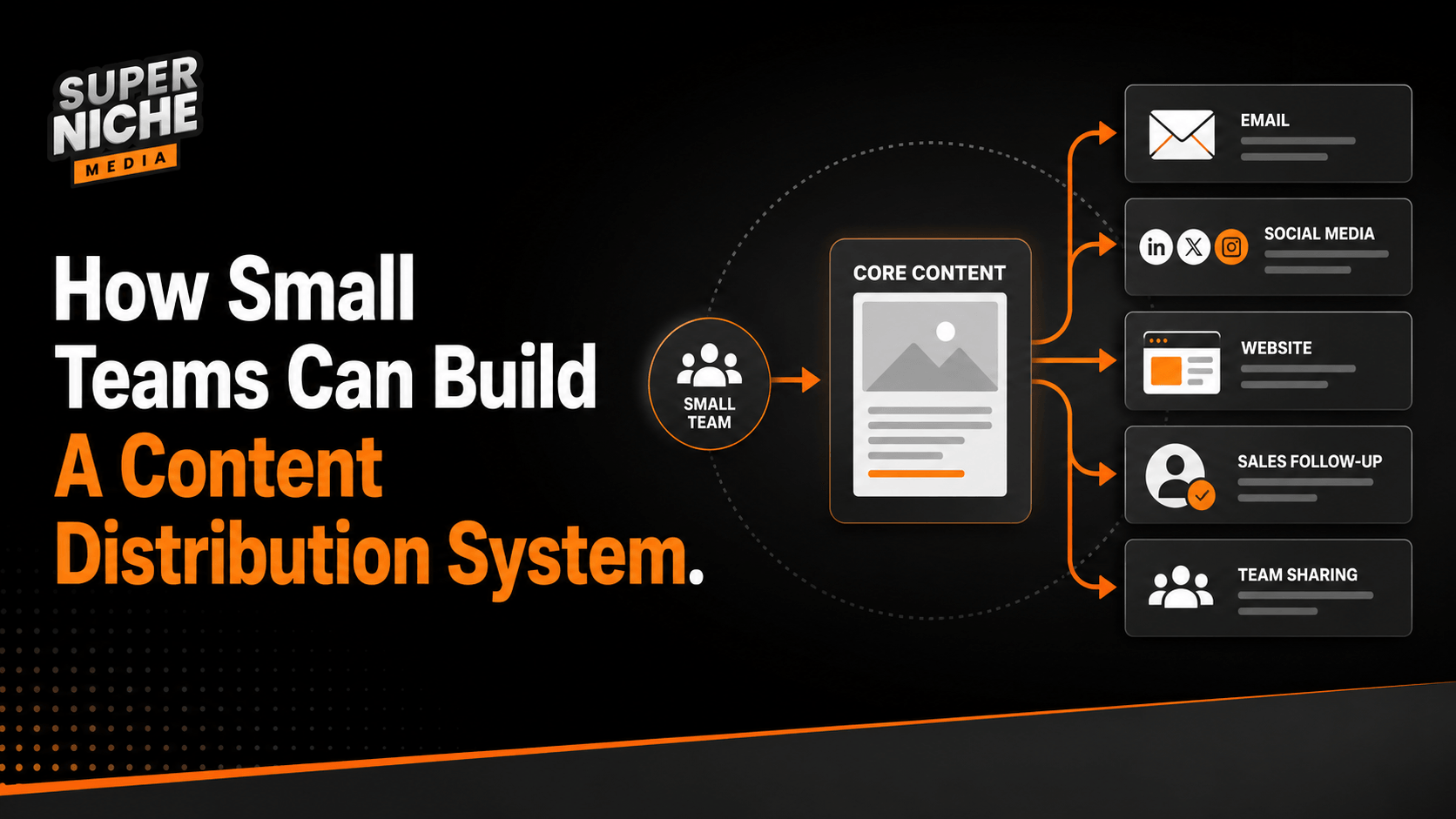
Publishing strong content is only one part of content marketing. A useful article also needs a clear path to the people who can benefit from it. Small teams often have limited time, a short list of channels, and several responsibilities competing for attention. A content distribution system creates a repeatable way to promote each piece without relying on last-minute decisions.
The system needs defined channels, clear ownership, realistic timing, and a basic method for reviewing results.
What Is A Content Distribution System?
A content distribution system is a documented process for sharing content across the channels your audience already uses. It covers where content gets shared, who handles each task, when promotion happens, and how results are reviewed.
A checklist, project board, or shared calendar may be enough. A practical system includes:
- A primary audience for each article
- Approved distribution channels
- A schedule for the first week
- An owner for every task
- A place to store assets and results
- A review point for improvements
Start With The Audience And Content Goal
Every distribution plan should begin with the person the article is meant to reach. A specific audience description gives the team direction. It helps shape the channel, headline, introduction, and call to action.
The team should also define the article’s primary goal. Some posts attract search traffic. Others support lead nurturing, answer sales questions, or build authority. One clear goal keeps the plan focused.
Questions To Answer Before Publishing
- Who needs this information most?
- What problem led them to search for it?
- Which channel is most likely to reach them?
- What action should they take after reading?
- Which sales conversations can use this article?
These answers guide the email, social caption, and sales message.
Choose A Small Set Of Reliable Channels
Small teams benefit from consistent activity on a few useful channels. Select channels based on audience behavior, team capacity, and the purpose of the content.
A business-to-business team may focus on email, LinkedIn, sales follow-up, and partner outreach. A local company may use email, Google Business Profile updates, and employee sharing.
| Distribution Channel | Primary Use | Suggested Owner | Typical Timing |
|---|---|---|---|
| Email Newsletter | Reach subscribers | Marketing Lead | Publication day |
| Social Media | Build visibility | Content Manager | Days 1, 3, and 7 |
| Sales Follow-Up | Support active leads | Sales Team | During conversations |
| Internal Sharing | Extend employee reach | Team Lead | Publication day |
| Partner Outreach | Reach related audiences | Partnerships Owner | Days 2 through 5 |
Add a channel when the audience is present and the team can maintain it.
Build A Seven-Day Distribution Schedule
A short promotion window keeps a new article visible after launch.
The First Week Distribution Plan
Day One: Publish And Share Internally
Publish the article, confirm that links work, check the mobile layout, and give the team a short description. Include the URL, audience, key takeaway, and suggested sharing message.
Send the article to team members who may need it during customer conversations.
Days Two And Three: Reach Core Audiences
Feature the article in an email, social post, or direct outreach message. Adapt the introduction to the channel. An email can explain the problem in a few sentences. A social post may lead with one useful observation. Sales can share the link in response to a specific question.
Days Four Through Seven: Extend The Reach
Share another angle, contact a relevant partner, and add the article to an active nurture sequence or resource page. Review early engagement for signs that the headline or description needs improvement.
Reader questions can support future articles and sales resources.
Create Reusable Distribution Assets
Distribution moves faster when each article includes a small asset package prepared before publication.
A useful package may contain:
- Two social media captions
- One email introduction
- Three short pull quotes
- A brief sales follow-up message
- One approved image
- A short employee summary
- Tracking links for major channels
Store these assets beside the article draft or inside the project task. This reduces repeated copywriting.
Assign Ownership Without Adding Meetings
Every task needs one owner. Shared responsibility can create delays when ownership is unclear.
List the owner beside every distribution step. The content manager may publish the article and prepare social copy. The email owner may schedule the newsletter. Sales may add the article to follow-up messages.
A brief status field can show progress:
- Ready
- Scheduled
- Published
- Shared
- Reviewed
The team can manage the process through an existing project board or content calendar. Clear ownership and visible deadlines reduce the need for extra meetings.
Connect Distribution With Sales And Customer Service
Sales and customer service teams hear recurring questions, objections, and concerns. Those conversations can guide content creation and promotion.
Give these teams an easy way to find approved articles. A searchable library or organized folder can work well. Group articles by customer question, service, or buying stage.
Make Each Article Easy To Use
For every article, include a short note explaining:
- Who should receive it
- Which question it answers
- Where it fits in the customer journey
- What message can introduce the link
This information helps team members share content naturally and reveals gaps when common questions lack a supporting resource.
Track A Few Meaningful Measures
Choose measures connected to the article’s main goal.
Search-focused content may be reviewed through impressions, rankings, organic visits, and engaged time. Lead-nurture content may be evaluated through email clicks, replies, form submissions, and sales usage. Authority content may be reviewed through mentions and qualified referral traffic.
Record results at consistent intervals, such as 30, 60, and 90 days. Add a short note about what happened and what the team learned.
Review The System Each Quarter
Schedule a quarterly review to remove unused channels, update templates, clarify ownership, and identify content that deserves another promotion cycle.
Look for patterns across several articles. Keep channels that bring qualified visitors. A frequently missed task may need a new owner or simpler format. An older article may benefit from updated examples and renewed promotion.
Build A System Your Team Can Maintain
A content distribution system gives every article a clear route to its audience. It reduces repeated decisions, supports sales conversations, and shows which channels create meaningful engagement.
Start with one audience, a small group of channels, a seven-day schedule, and named owners. Document the process in a format your team already uses. Consistent distribution can turn a growing content library into an active business resource.